Within the existing curriculum framework, integrating artificial intelligence into “teaching, learning, and assessment” helps teachers improve instructional efficiency and learning outcomes while addressing the diverse needs of students.
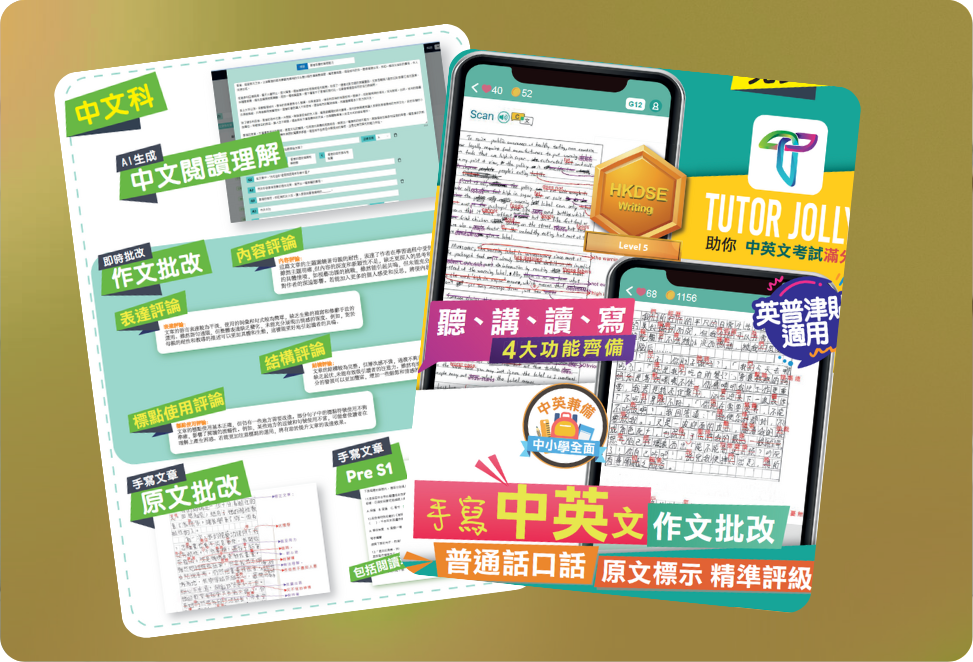
Writing Feedback Support: Provide instant feedback on student essays to reduce the grading burden on teachers.
Related Tools and Courses
In Chinese writing instruction, teachers often need to identify common issues across a large volume of essays, such as failing to address the prompt, unclear paragraphing, repetitive vocabulary, or incomplete expression. With AI assistance, teachers can upload students' handwritten essays or input the text, allowing the system to provide preliminary analysis on grammar, vocabulary, structure, content completeness, and clarity.
How it helps teachers:
Instead of grading essays one by one, teachers can more quickly identify common writing issues and focus classroom time on critical guidance, such as staying on topic, content structure, paragraph organization, and depth of expression.
Generate targeted exercises in seconds: Quickly design practice materials based on student proficiency and lesson topics.
Related Tools and Courses
For example, if a teacher plans to teach expository writing next week but has students with varying proficiency levels, they can set the topic, word count, difficulty, and question types to have AI generate a reading comprehension passage tailored to the students' needs. This can be accompanied by exercises on vocabulary, paragraph summaries, content inference, and main idea analysis. In class, the teacher can guide students through the passage before they complete the exercises. After class, students can use the auto-grading feature for independent practice. Teachers can then analyze student performance to identify common pitfalls, such as difficulty grasping key points, weak inference skills, or a lack of understanding of key vocabulary.
Benefits for teachers:
Reading comprehension exercises are no longer just extra worksheets; they can be closely aligned with classroom themes and student levels, helping teachers prepare suitable materials faster and plan follow-up instruction.
Immersive learning:
Let students converse with characters or authors from the text
Related tools and courses
Teachers can use AI avatars to create interactive Chinese learning scenarios, allowing students to gain a deeper understanding of texts through conversation. For example, when reading stories, classical texts, or biographies, AI avatars can embody characters from the text, enhancing interactivity and immersion.
For instance, in a unit on the Three Kingdoms, you can design a "Dialogue between Liu Bei and Zhuge Liang" scenario. This allows students to feel as if they are in the historical setting, interacting with virtual versions of these figures to understand the background, relationships, and plot, thereby making the study of history and literature more engaging and immersive.
At the same time, this approach helps students better grasp character psychology, historical context, plot development, and thematic ideas.
Benefits for teachers:
Transform one-way Q&A into interactive exploration to increase student engagement, especially for literature, classical Chinese, biographies, and thematic reading activities.
Improve assessment efficiency
Instantly generate differentiated assessment questions and use AI to analyze student performance, making continuous assessment more efficient and effective.
Personalized teaching support
Adapt teaching materials and exercises to student progress, catering to diverse learning needs and enabling differentiated instruction.
Spark student creativity
Integrate AI tools into creative activities to boost student engagement and expression in their studies.
Free Consultation
Understand the school's existing teaching needs and evaluate the best entry points for integrating AI.
Customized Solutions
Develop a tailored AI application plan based on subjects, grade levels, and curriculum frameworks.
Pilot Implementation and Continuous Support
We provide professional training, teaching materials, and ongoing support to ensure a smooth implementation.
SchoolMind
School-Based AI Infrastructure + Custom GPT Platform
A dedicated AI infrastructure and school-based GPT platform that allows schools to securely and flexibly maintain data sovereignty. Build your own AI capabilities to support administrative management, lesson preparation, and student self-directed learning.
Tutor Jolly
Self-Directed Learning Tools for Primary and Secondary English and Chinese
Tutor Jolly covers the four core areas of listening, speaking, reading, and writing, helping students consolidate their language skills while reducing the workload for teachers in grading and follow-up.
In-School AI Curriculum
For Classroom and Extracurricular Use
Covering Vibe Coding and other AI applications, we focus on helping students understand how artificial intelligence is applied across different subjects and everyday scenarios.
In-School AI Extracurricular Activities
Interactive AI Introduction
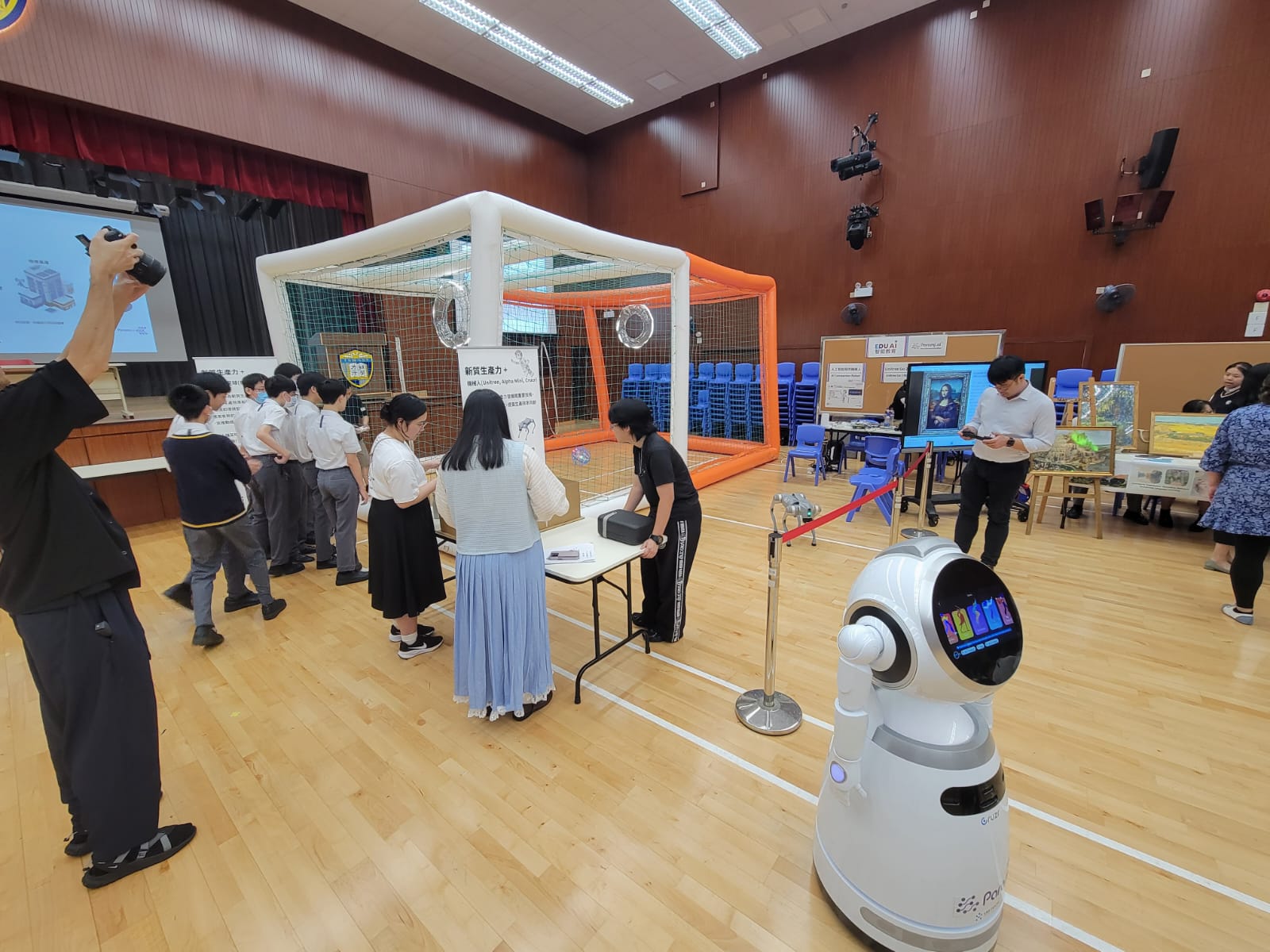
Combining lectures, workshops, robotics, and inquiry-based learning, we help students experience the power of AI firsthand while cultivating the essential digital literacy and creativity needed for the future.
Free Consultation — Smart Classroom Funding Scheme
We offer free school consultations to understand your curriculum needs and assist with Smart Classroom funding applications. No technical background is required to get started.
Q1How can AI be applied to Chinese language teaching?
AI can be integrated into the four core areas of Chinese language learning: reading, writing, listening, and speaking. For example, teachers can use AI to instantly generate reading materials tailored to student levels, while students can use AI tools to assist in drafting and revising essays, enhancing the depth and breadth of their language learning.
Q2What role can AI play in assessing Chinese language learning?
AI assists teachers with continuous assessment, including real-time analysis of student writing, generating personalized exercises, and tracking learning progress. Integrated with the SchoolMind and MyEd platforms, assessment data directly informs instructional decisions.
Q3Will using AI to teach Chinese cause students to lose their ability to learn independently?
No. The role of AI is to provide support, not to replace student thinking. Through effective instructional design, AI can guide students toward deeper reading analysis and creative thinking, fostering independent learning rather than reliance on tools.
Q4How does the Smart Classroom scheme support schools in implementing AI for Chinese language teaching?
The Smart Classroom Funding Scheme provides subsidies for schools to purchase AI learning platforms. EDU A.I. assists schools in developing tailored plans, offering end-to-end support from consultation to implementation. Learn more about the Smart Classroom funding scheme→
.png)