Locally developed

Quickly transform paper-based exam scripts into actionable assessment data

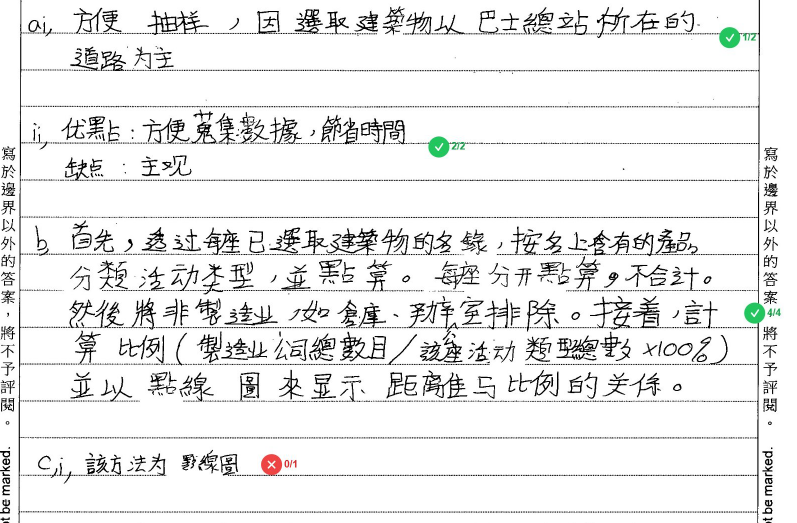
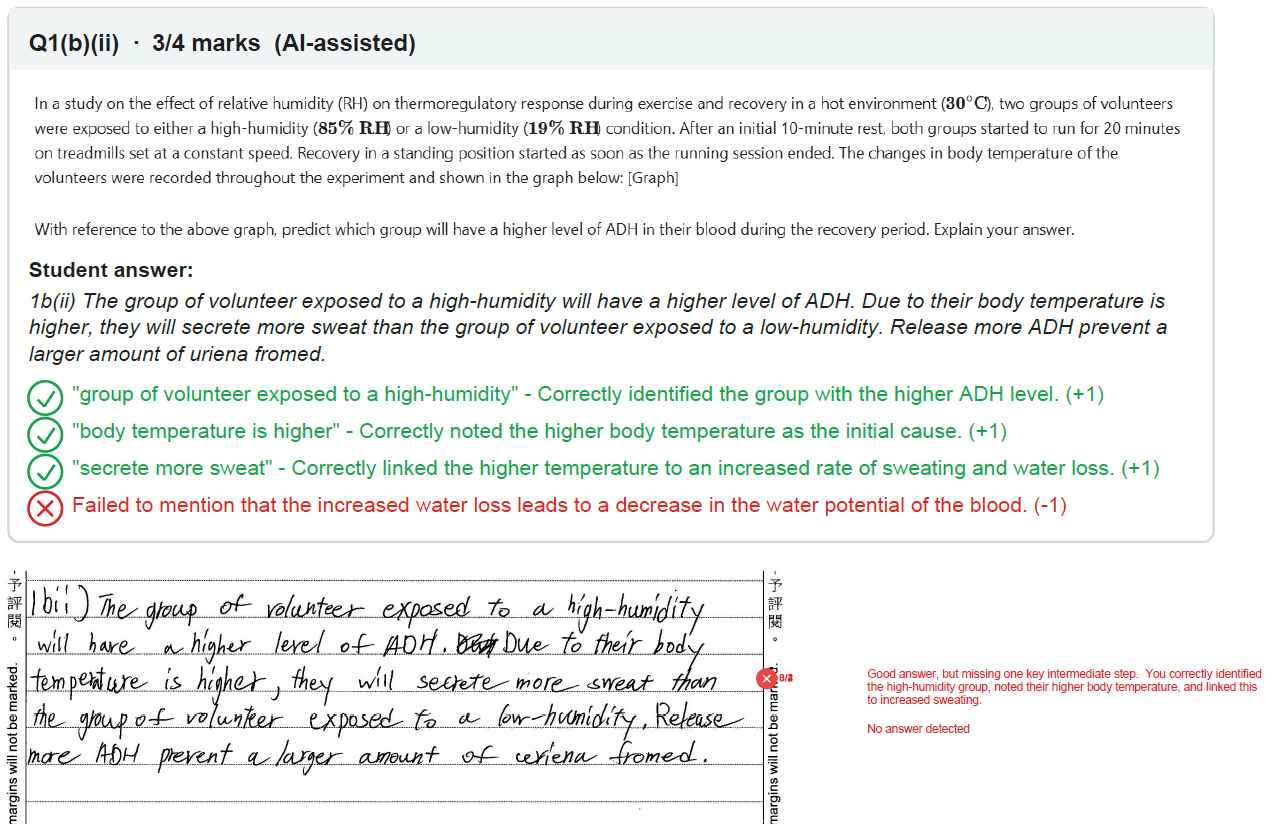
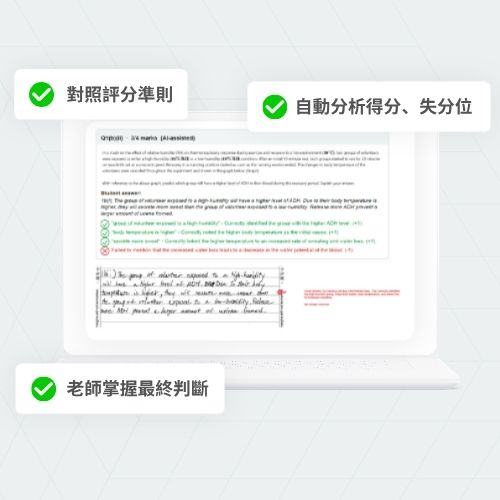
SchoolMind Grading assesses student answers based on public examination or school-based marking criteria, automatically generating scores, comments, strengths, areas for improvement, and detailed explanations. Teachers retain final grading authority, while students receive specific feedback faster.

No need to take stacks of exam papers home

AI completes preliminary grading

No need to repeatedly write similar comments

Organize feedback based on grading rubrics

Students don't have to wait days to understand why they lost points

Organize feedback based on grading rubrics

Principals don't have to wait until after exams to see the issues

Identify student performance risks earlier
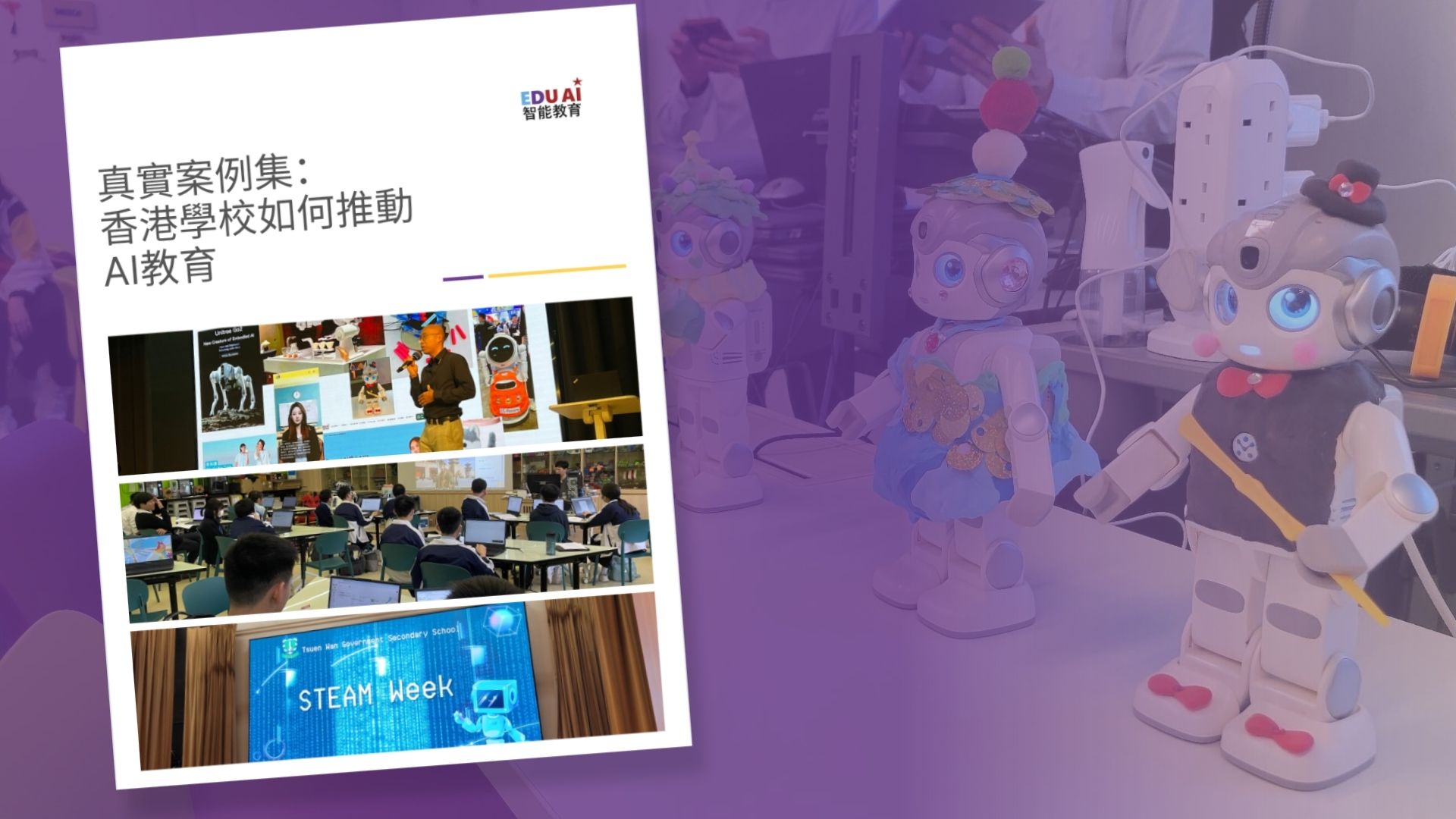
Primary school students learning to use the Alpha Mini AI robot

Once the grading is done, the real analysis begins

Traditional paper-based gradingUsing SchoolMind Grading
Taking stacks of exam papers home after school to grade them one by one✓ AI completes preliminary grading based on rubrics, allowing teachers to focus on review and confirmation
Repeatedly writing similar comments and calculating totals for each paper✓ Automatically generate specific feedback, organize scores, and highlight areas of strength and improvement
Students wait days or even a week to receive their results✓ Provide specific feedback to students faster and address common mistakes in a timely manner
Department heads manually organize class and subject performance in Excel✓ Transform paper-based answers into comparable student, class, and subject data
Management waits until major exams or mock tests to discover risks✓ Identify weaknesses early through daily assessments to build DSE performance predictions and a basis for intervention
"Grading shouldn't just be about assigning a score; it should help teachers understand what to teach next."

From paper exams to instructional decisions: five steps to put assessment data to work

See how SchoolMind Grading works, from uploading exam papers and completing preliminary grading to assisting teachers with follow-up instruction and helping management track performance trends.

1

Prepare existing exam papers

Use your school's existing exam papers, student answers, and grading rubrics directly.

2

Upload PDF documents

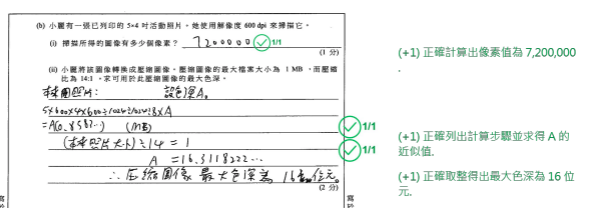
Recognize printed content, handwritten answers, mathematical symbols, and charts.

3

AI analysis of strengths and weaknesses

Organize scores, comments, strengths, weaknesses, and detailed solutions.

4

Teacher confirms and arranges follow-up

Review, edit, export, and share results.

5

Management oversight of trends and risks

Compare performance across students, classes, and subjects to proactively plan for remedial support, enrichment, and resource allocation.

Go beyond telling students they are wrong; show them exactly how every point is earned or lost.

Integrating AI into Classroom Teaching

EDU A.I. offers two main tracks: AI Courses and STEAM Courses. Both integrate AI elements to help students develop creative thinking, problem-solving skills, and the essential digital literacy required for the AI era.

AI Courses focus on the application of artificial intelligence across various subjects and daily life. Students learn to leverage AI tools to support their learning, creativity, and problem-solving, making these courses ideal for schools looking to promote AI literacy and interdisciplinary integration.

STEAM Courses combine science, technology, engineering, arts, and mathematics. Through activities such as programming, robotics, scientific experiments, engineering design, and creative projects, students engage in interdisciplinary learning. These courses are more technical and hands-on, suitable for schools aiming to strengthen their STEM/STEAM development, practical skills, and innovative problem-solving capabilities.

Integrating AI into Classroom Teaching

EDU A.I. offers two main tracks: AI Courses and STEAM Courses. Both integrate AI elements to help students develop creative thinking, problem-solving skills, and the essential digital literacy required for the AI era.

AI Courses focus on the application of artificial intelligence across various subjects and daily life. Students learn to leverage AI tools to support their learning, creativity, and problem-solving, making these courses ideal for schools looking to promote AI literacy and interdisciplinary integration.

STEAM Courses combine science, technology, engineering, arts, and mathematics. Through activities such as programming, robotics, scientific experiments, engineering design, and creative projects, students engage in interdisciplinary learning. These courses are more technical and hands-on, suitable for schools aiming to strengthen their STEM/STEAM development, practical skills, and innovative problem-solving capabilities.

Integrate AI into Classroom Teaching

EDU A.I. offers two main tracks: AI Courses and STEAM Courses. Both integrate AI elements to help students develop creative thinking, problem-solving skills, and the essential digital literacy required in the AI era.

AI Courses focus on the application of artificial intelligence across various subjects and daily life, teaching students how to leverage AI tools to support learning, creation, and problem-solving. These are ideal for schools looking to promote AI literacy and interdisciplinary integration.

STEAM Courses combine science, technology, engineering, arts, and mathematics. Through activities such as programming, robotics, scientific experiments, engineering design, and creative projects, students engage in interdisciplinary learning. These courses are more technical and hands-on, suitable for schools aiming to strengthen their STEM/STEAM development, practical skills, and innovative problem-solving capabilities.

By Subject
AI Courses

Integrate AI into Classroom Teaching

Covering 3 subjects to meet the "AI for All Subjects" requirements. We provide customized programs for primary and secondary schools across various subjects, taught on-site by our professional instructors, so no internal teaching staff is required.

Reduce grading time for teachers and help principals identify learning risks earlier.

The same assessment results support teachers in immediate student follow-up while enabling management to make earlier, data-driven instructional decisions.

Teachers no longer need to take grading home

Reduce time spent on manual grading, repetitive feedback, and score calculation; quickly identify common areas where the class struggles to facilitate classroom explanations, individual follow-ups, and timely feedback for students.

Principals and management no longer need to wait until after mock exams to identify risks

Accumulate performance data from daily homework, quizzes, and past papers to compare trends across students, classes, and subjects early, establishing a foundation for DSE performance prediction and resource allocation.

No need to wait until after mock exams to realize students are falling behind

Transform performance in daily homework, quizzes, and past papers into sustainable data, allowing schools to identify risks for students, classes, and subjects earlier.

Average score trends

Commonly missed knowledge points

Students requiring follow-up

Assessment completion progress

From chasing data to instant access

Eliminate the need for different departments to repeatedly compile and submit the same data.

From reactive summaries to proactive intervention

Spot recurring weaknesses through daily assessments.

From average scores to specific reasons for mark loss

Identify exactly which questions and concepts are causing students to lose marks.

Aligned with Hong Kong school assessments and public exam formats

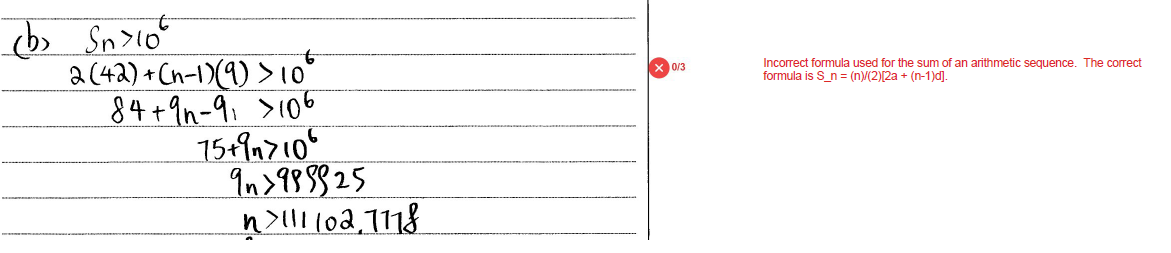
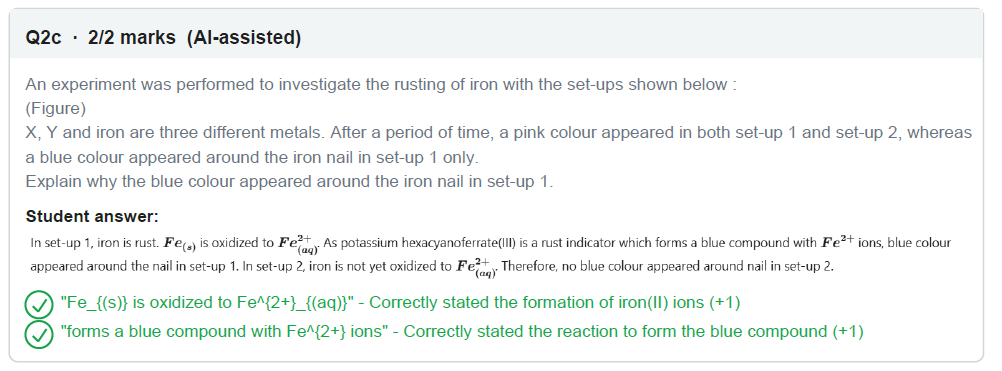
Covers subjects including Mathematics, Physics, Chemistry, Biology, Geography, BAFS, ICT, and STEM, with each subject showcased through screenshots of actual grading results.
By Subject
AI Courses

Integrate AI into Classroom Teaching

Covers 3 subjects to meet the AI for All Subjects requirement. We provide customized solutions for primary, secondary, and cross-curricular levels, taught on-site by our professional instructors—no need for schools to provide their own staff.

Grading Report Sample

AI assists with preliminary grading, with teachers retaining final professional judgment

Analyze based on the grading criteria provided by the teacher

Teachers can review and edit results

Supports Traditional Chinese and English

OCR recognition rate of approximately 90–97%

AI results must be verified by teachers before use

AI does not replace professional teacher judgment

How Hong Kong schools are integrating AI grading into existing teaching workflows

A co-educational secondary school in Kwun Tong is currently piloting SchoolMind Grading for senior secondary Physics and Mathematics, supporting the grading of DSE assignments, quizzes, and past papers.

Teachers particularly appreciate the system's automated grading, scoring features, and intuitive interface. The PDF import and export design also allows teachers to integrate it into their existing workflows without needing to significantly change their established teaching habits.

View Case Study →

This is some text inside of a div block.

Supports grading needs for various primary and secondary school subjects

Secondary School Subjects
Mathematics, Physics, Biology, Chemistry, Combined Science, Geography, BAFS, Computer / ICT / STEM
Primary School Subjects
Chinese, English, Mathematics, Science, General Studies, IT / CT, Humanities
Supported Question Types
Multiple-choice, short-answer, long-answer, and image-based questions
File Formats
PDF
Processing Time
Approximately 4–8 minutes, depending on file size and system load.
Document Language
Traditional Chinese, English
OCR Recognition Rate
90–97%
AI Engine
Google Gemini or equivalent intelligence level
This is some text inside of a div block.

FAQ

Can SchoolMind Grading grade handwritten answers?

Yes, SchoolMind Grading supports OCR for handwritten student answers. The recognition rate is approximately 90–97%, though actual performance depends on handwriting clarity and question type.

Can we use our own school grading rubrics?

Yes, teachers can upload school-specific or public exam rubrics, and the system will analyze student answers based on those criteria.

Is AI grading accurate?

SchoolMind Grading analyzes responses against provided rubrics; however, accuracy depends on answer formatting and document quality. Teachers can review and edit results to ensure accuracy.

Can teachers modify scores and feedback?

Yes, teachers can review, adjust, and confirm AI-generated scores and feedback, retaining final professional discretion.

Which subjects and question types are supported?

We support subjects including Mathematics, Physics, Chemistry, Biology, Integrated Science, Geography, BAFS, and ICT/STEM, covering question types such as multiple-choice, short-answer, long-answer, and image-based questions.

How are student data and school documents handled?

Student data and exam documents are used solely for grading and analysis, and are stored and handled in accordance with your school's established data processing and privacy requirements.

Do I need to change my existing paper-based teaching workflow?

No, teachers can use their existing question papers, answer sheets, and grading rubrics directly without needing to significantly change their current teaching practices.

How long does it take to process an exam paper?

Processing typically takes about 4–8 minutes, depending on the file size.

Can I process an entire class's answers in bulk?

Yes, teachers can upload an entire class's answers at once, and the system will batch-process the preliminary grading and report generation.

What analytics can management view?

Management can view trends in average scores for students, classes, and subjects, identify common knowledge gaps, track students who need follow-up, and monitor assessment progress.

Bring an existing exam paper and see how SchoolMind Grading handles the marking.

Book a product demo. We can use your school's own questions, student answers, and grading rubrics to demonstrate how the system generates scores, analyzes strengths and weaknesses, and provides detailed feedback.


EDU.AI 下載指南彈窗