SchoolMind Grading assesses student answers based on public examination or school-based marking criteria, automatically generating scores, comments, strengths, areas for improvement, and detailed explanations. Teachers retain final grading authority, while students receive specific feedback faster.
AI completes preliminary grading
Organize feedback based on grading rubrics
Organize feedback based on grading rubrics
Identify student performance risks earlier
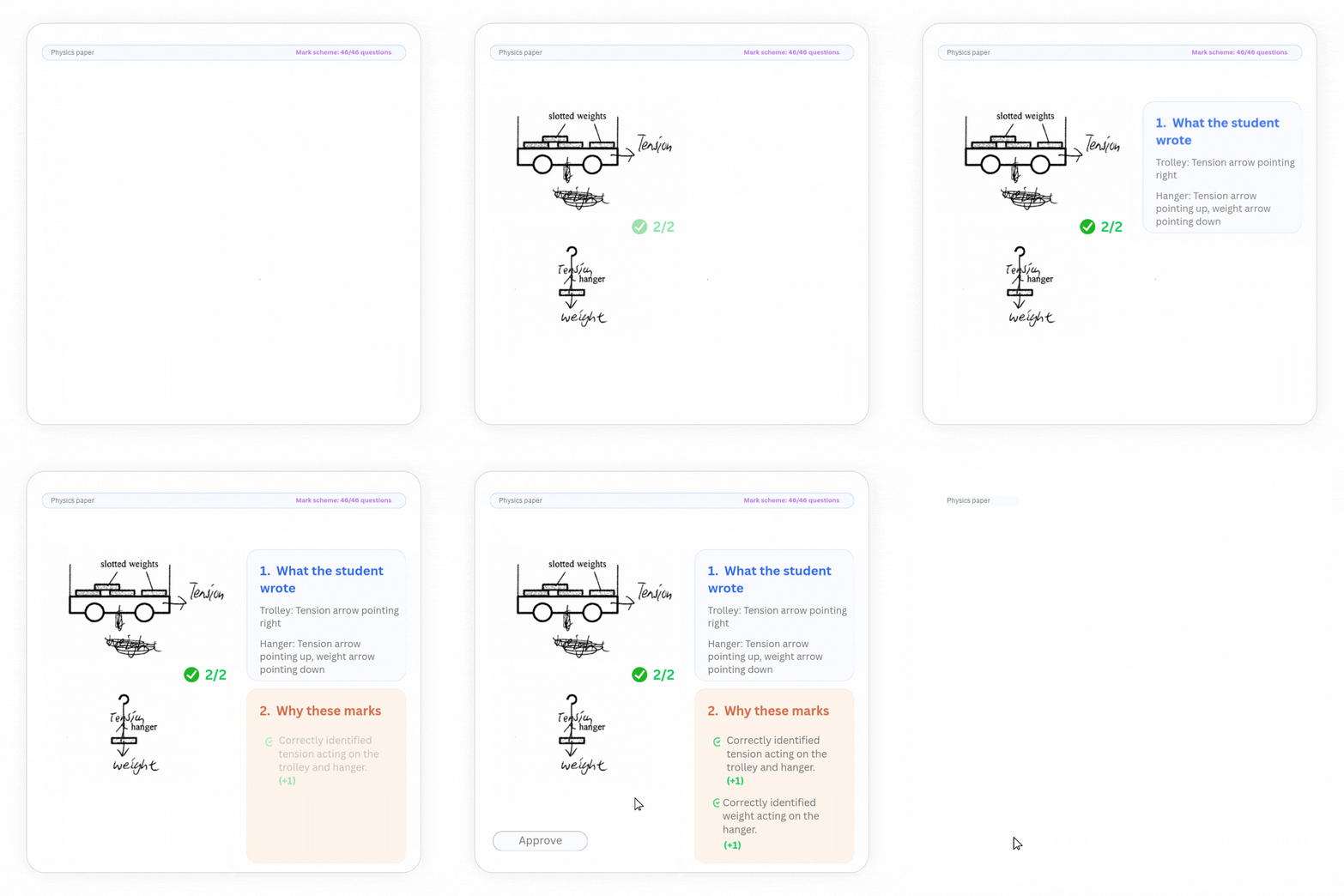
| Traditional paper-based grading | Using SchoolMind Grading |
|---|---|
| Taking stacks of exam papers home after school to grade them one by one | ✓ AI completes preliminary grading based on rubrics, allowing teachers to focus on review and confirmation |
| Repeatedly writing similar comments and calculating totals for each paper | ✓ Automatically generate specific feedback, organize scores, and highlight areas of strength and improvement |
| Students wait days or even a week to receive their results | ✓ Provide specific feedback to students faster and address common mistakes in a timely manner |
| Department heads manually organize class and subject performance in Excel | ✓ Transform paper-based answers into comparable student, class, and subject data |
| Management waits until major exams or mock tests to discover risks | ✓ Build Hong Kong secondary school public examination performance predictions and a basis for intervention |
See how SchoolMind Grading works, from uploading exam papers and completing preliminary grading to assisting teachers with follow-up instruction and helping management track performance trends.
Use your school's existing test papers, student answer sheets, and grading rubrics directly.
Recognize printed text, handwritten answers, mathematical symbols, and charts.
Organize scores, comments, strengths, areas for improvement, and detailed explanations.
Review, edit, export, and share results.
Compare the performance of students, classes, and subjects to proactively plan for remedial support, enrichment, and resource allocation.
The same assessment results support teachers in immediate student follow-up while enabling management to make earlier, data-driven instructional decisions.
Reduce time spent on manual grading, repetitive feedback, and score calculation. Quickly identify common pitfalls across the class to streamline lesson planning, individual follow-ups, and the delivery of specific feedback to students.
Accumulate performance data from daily homework, quizzes, and past papers to track student, class, and subject trends early, providing a foundation for predicting Hong Kong public exam performance and optimizing resource allocation.
Covers subjects including Mathematics, Physics, Chemistry, Biology, Geography, BAFS, ICT, and STEM, with each subject showcased through screenshots of actual grading results.
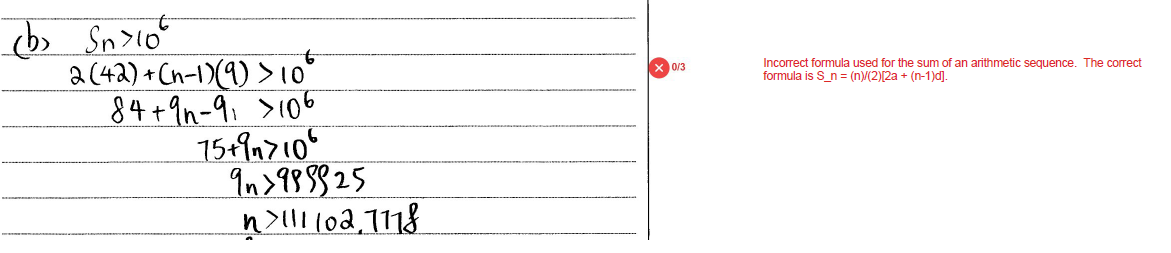
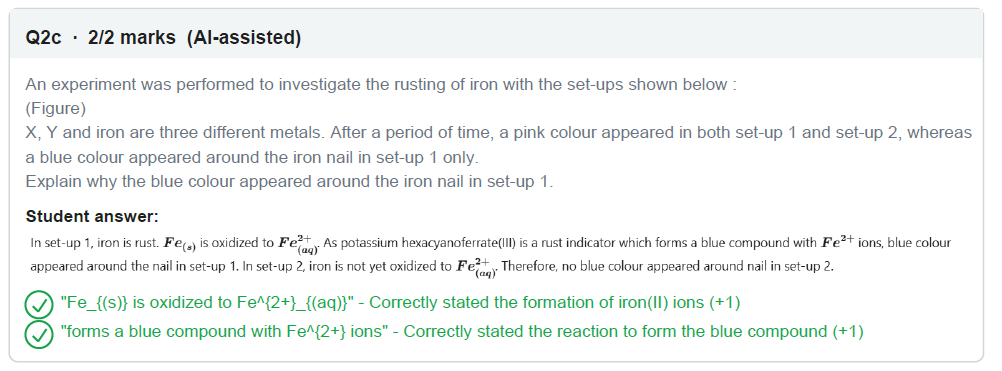
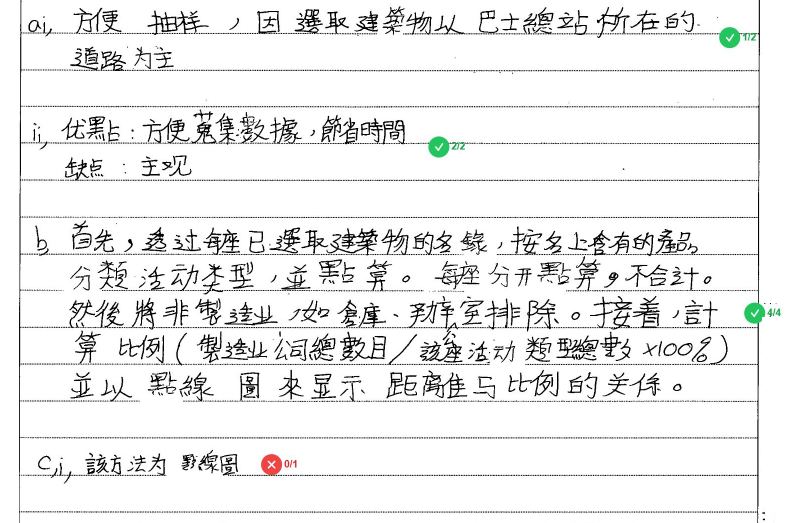
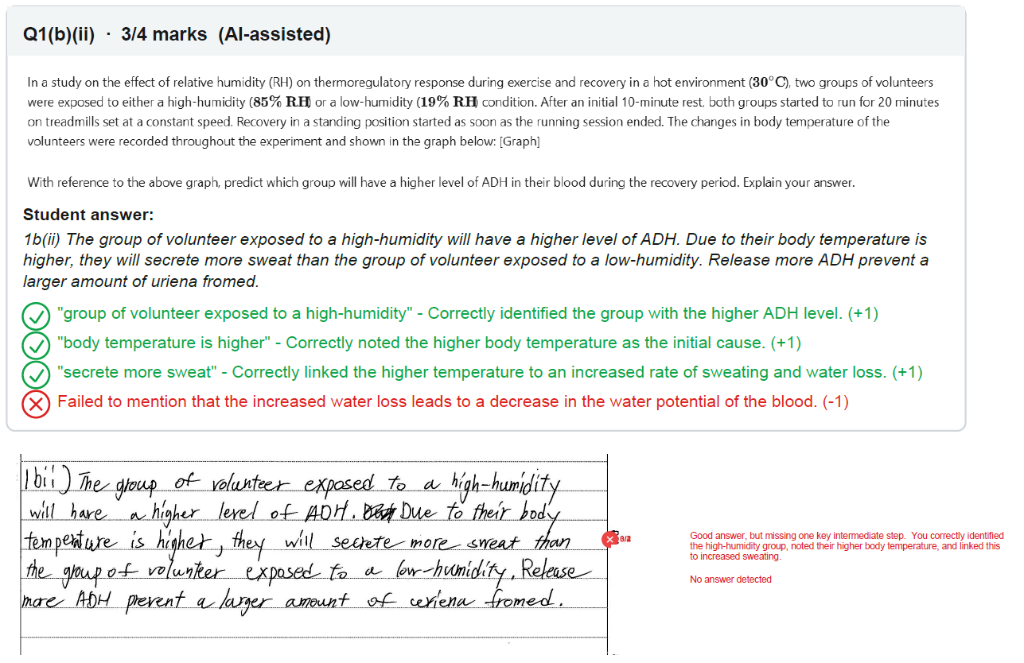
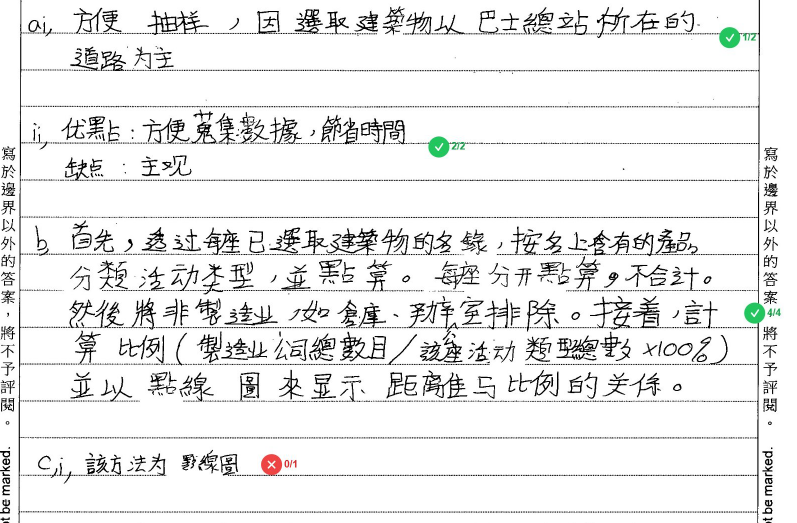
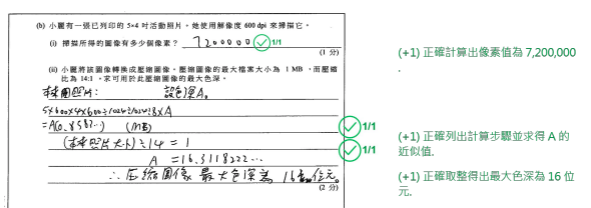
Yes, SchoolMind Grading supports OCR for handwritten student answers. The recognition rate is approximately 90–97%, though actual performance depends on handwriting clarity and question type.
Yes, teachers can upload school-specific or public exam rubrics, and the system will analyze student answers based on those criteria.
SchoolMind Grading analyzes responses against provided rubrics; however, accuracy depends on answer formatting and document quality. Teachers can review and edit results to ensure accuracy.
Yes, teachers can review, adjust, and confirm AI-generated scores and feedback, retaining final professional discretion.
We support subjects including Mathematics, Physics, Chemistry, Biology, Integrated Science, Geography, BAFS, and ICT/STEM, covering question types such as multiple-choice, short-answer, long-answer, and image-based questions.
Student data and exam documents are used solely for grading and analysis, and are stored and handled in accordance with your school's established data processing and privacy requirements.
No, teachers can use their existing question papers, answer sheets, and grading rubrics directly without needing to significantly change their current teaching practices.
Processing typically takes about 4–8 minutes, depending on the file size.
Yes, teachers can upload an entire class's answers at once, and the system will batch-process the preliminary grading and report generation.
Management can view trends in average scores for students, classes, and subjects, identify common knowledge gaps, track students who need follow-up, and monitor assessment progress.
可以,老師可一次上載全班學生答案,系統會批量完成初步批改及報告整理。
Book a product demo. We can use your school's own questions, student answers, and grading rubrics to demonstrate how the system generates scores, analyzes strengths and weaknesses, and provides detailed feedback.


.jpg)
.gif)
.png)